Posts tagged: LP

Audio, Audiophiles and the Aesthetic Experience of Medium

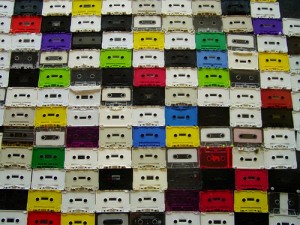
Back in December I bragged about predicting the onset of the cassette revival, and five months into 2010 it looks like that revival is in full swing. Articles about the renewed interest in the lowly compact cassette have appeared in as wide variety of sites as the Chicago Tribune, UK Guardian and Pitchfork. Much of the press interest seems to be driven by the wave of cassette-only releases and cassette-based labels, combined with the novelty of renewed interest in a medium many believed to be wholly abandoned and discredited.

This past week my Radio Survivor colleague Jennifer Waits posted about a recent piece at PopMatters by Jay Somerset titled “The Day the (AM) Music Died.” In it Somerset makes the case that the particular sonic dynamics of AM radio–mid-range heavy without low bass or high treble–dictated the production quality for records that hoped to be Top 40 hits:

To sound good on mono AM, you needed a dense, reverberant, everything-at-once sound rather than a dynamic, stereo recording that only sounded good on FM, which the majority of people never even listened to.

Somerset brings his argument into the future by noting how lo-fi production techniques that harken back to that AM radio sound have become popular again amongst indie rock artists. This modern take on it creates,

the sort of sound that reminds you of something, but is inherently different. In other words, while it conjures the past, it’s only retro in its top-coat sheen and could never be mistaken for a song from another era, nor charged with being mere nostalgia art.

Nevertheless Somerset’s analysis resonated with me because I’d been thinking quite a bit lately about the aesthetics of medium. On the one hand, I am a bit of a (cheapskate) audiophile. I enjoy well recorded and reproduced sound. On the other hand, I’ve been a media producer long enough to know that the pursuit of some kind of absolute fidelity is asymptotic, if not Quixotic. Every choice made by a recording engineer, electrical engineer and equipment designer has some kind of impact on the sound. That result of that impact may be more or less pleasing to some people. But any impact means that the sound reproduced by your speaker varies in any number of ways from the original sounds created before the microphone (and that doesn’t even take into account strictly synthetic sounds that were never recorded by a microphone).

Here in the second decade of the 21st century we are well into the second century of recorded sound. In this short history we’ve seen five different fundamental analog recording media: wax cylinder, shellac records, vinyl records, wire and magnetic tape. Vinyl and magnetic tape have themselves seen several forms, like 78 rpm records, 45 rpm singles, reel-to-reel tape, 8 track tape and the cassette tape. The move to digital in the last thirty years has also seen several different media: digital audio tape, compact disc, hard disk and flash memory. With digital the medium is often less important than the format of the data, whether it’s 44.1 khz of 16 bit samples on a CD or 128kbps of compressed MP3. Whether analog or digital, what remains true is that the medium is operative and important.

For listeners, the delivery medium is the variable we have the closest relationship to, and the most control over. We can choose to listen to a CD or an MP3. Twenty years ago people often made the choice between cassette or vinyl. While the choice was often dictated by economics or convenience–vinyl doesn’t play so well in a moving vehicle–the quality of sound was and is often an important consideration. At this point I want to refine the use of the word “quality” with regard to sound. Often we think of sound quality as meaning having greater fidelity, or more closely resembling the original sound recorded in the studio. However, quality also means the nature and dimension of something; a leaf may have the quality of being “green.” Similarly, a reproduced sound may have the quality of being quiet, bass-heavy or sibilant. When speaking of playback medium, then, the notion of sound quality in this respect is important.

Audiophiles primarily argue about the relative fidelity of a playback medium and therefore its ability to reproduce what is believed to be the full simulacrum of the original performance or recording. Of course, the question is never that simple, since everything in the playback chain, from the player itself to amplifiers, speakers and the cables that connect them have some role to play as well. Yet, it’s generally believed that the source medium dictates the fundamental potential for fidelity and the nature of the sound quality heard over speakers or headphones.

Amongst commonly available formats, in the audiophile world CDs and vinyl records are generally held to have the greatest potential for fidelity and sound quality which is relatively uncolored and unmodified from the original recording. Each medium has its adherents who present good arguments for their superiority, or potential superiority. By comparison, cassettes and MP3s have garnered cautious acceptance as inherently compromised media that might be coxed to provide adequate fidelity in exchange for convenience and other lesser reasons.

What seems to mystify many audiophiles is why anyone would prefer cassettes (or MP3s) for recording or playback if things like mobile playback and other logistical practicalities were factored out. I contend that’s because of principle concern of audiophile pursuits is this quest for perfection, for fidelity, overall. If a medium introduces some degree of coloration or change in the sound on hears that’s a deviation from fidelity, it’s inherently a distortion of the original intent of the artist, producer or engineer.

Nearly three decades into the CD era audiophiles generally recognize that even the best vinyl or CD playback systems introduce this deviation from fidelity. Yet, they still nakedly pursue that elusive fidelity all the more fervently the more minute–and costly–each improvement becomes.

At this point in time the average adult music lover has likely personally experienced at least three distinct playback media. Someone who’s eighteen probably has heard cassettes, CDs and MP3s. Someone who’s thirty probably had vinyl as a child, and might have used 8-tracks, too. And now, years after LPs and cassettes were supposed to be dead and replaced by digital audio playback, they’re still with us.

Instead of a Darwinian evolution of playback medium towards something–like CDs–which is inherently superior to those that came before, today we have a menu of playback media before us. It’s as if Cro-Magnon and Neanderthal men were browsing next to us Homo Sapien Sapiens at the supermarket and making themselves available on Match.com.

With the vinyl revival in full swing, the music fan in a good indie record shop again has the choice of whether to buy an album on CD or vinyl. She also can choose to hit up the iTunes music store for an AAC music file or browse to Amazon for an MP3. Heck, she might luck out with an MP3 download code coming for free along with that vinyl purchase. And with the cassette revival just starting to heat up she might be able to find a few more limited releases on cassette, too.

So what dictates the choice amongst these media? Obviously, practicality is the biggest factor — if you don’t have a turntable or cassette player then a record or cassette isn’t likely to be your first choice. The next factor is probably whether or not the release is available on other formats. If you’re coveting a vinyl-only, cassette-only or MP3-only release, then your choice is made for you.

After pragmatics, the biggest choice is aesthetics. If you can get an album or CD or vinyl, why choose vinyl when CD is presumably the fittest medium? I say for myself that I like and enjoy the particular aesthetic peculiarities of vinyl records. From the physical dimensions of the cover and the record itself, to its sonic quality when played back on a decent turntable, I like whatever changes or distortions that vinyl records introduce into the sound playback experience.

It may be that vinyl records have more fidelity, that CDs represent more of an aberration. Or it may be that vinyl’s tonal curve more closely matches the human ear’s sensitivity. It might just be some potent combination of nostalgia, age-related hearing loss and psychology. In the end, it kinda doesn’t matter, as long as I like and enjoy the sound and experience.

Back to cassettes, I have both fond and not-so-fond memories of them. Rocking a favorite mix tape in the car stereo is a favorite memory, while fishing out a string of disembowled tape from a broken deck is not. But I can also distinctly remember buying an album on CD that I’d only ever heard on cassette and being profoundly disappointed. The apparent clarity and revealing quality of the CD seemed to ruin the experience I’d always had with the tape.

We live in an era of aesthetic choice. Other artistic media are experiencing the effects of this array of choices, too. Photographic film, even Polaroids, are seeing a revival a decade into mainstream digital photography. Visual artists are embracing letter press and other supposedly antiquated printing methods. High definition video still hasn’t displaced 35mm motion picture film, while 8mm movies are seeing a small underground resurgence. Not too many people are making the arguments that these older forms are better than the newer. Instead, they’re just different, and sometimes more interesting or pleasing.

For most of the short history of recorded sound the goal of fidelity has ruled the roost. But with the cycle of obsolescence for playback media becoming ever shorter, there’s also a growing weariness with being forced to abandon a particular medium just because something else is purported to be better.

Those of us who never dumped our vinyl records knew that they still sounded good, even if different from CDs. Why upgrade something that works?

In 1992 that seemed like an almost farcical, luddite attitude. Today, when people feel like they’re being asked to abandon their CDs and DVDs that replaced their VHS tapes and cassettes, it starts sounding more logical. Beyond mere economics, we’re left to consider what we liked about these media to begin with.

Vinyl sounds different than CDs just like watercolor looks different than oil paints. If fidelity was the ultimate consideration, then why didn’t photography obliterate portraiture?

The music lover now faces a richer world where she can choose how she hears her music, and the musician can choose how its delivered. Those choices have both meaning and quality. The choices give both more control over the experience.

What’s wrong with that?

Turntables at CES: Still Mostly Cheap Plastic

The annual Consumer Electronics Show has come and gone, with the usual array of new gadgets ranging from the cool to useless, to vaporware. Over at RadioSurvivor I covered some of the news relating to radio. Along with radio and a metric ton of iPod/iPhone accessories, there were some new vinyl playback devices at CES, too.

Stereophile magazine covered the high-end arena of $4500 phono cartridges and $11,000 turntables, otherwise ignored by the rest of the mainstream electronic press. What caught the typical reporter’s eye was a bevy of new cheap plastic turntables studded with USB connectors and memory card slots.

plastic, plastic, plastic

The LA Times’ music blog notes the models offered up by retro-plastic purveyor Crosley and space-age plastic pusher Ion. As I’ve noted before, the actual record-playing parts of these “new” turntables are tried-and-true knockoffs of the flimsy plastic turntables previously seen on your mid-80s compact stereo.

What's old and crappy is new and crappy.

Bloggers seemed particularly excited by the Crosley Revolution turntable, which, as Retro-Thing points out, is a knock-off of the 1980s Audio-Technica AT-727 Sound Burger record player. Although R-T’s James Graheme recalls that it has “an almost mythic reputation for high-quality sound,” my own recollection is that they were fiddly and mediocre at best. Sony had its own versions of the platter-less record player in the 80s, too, the PS-F5 and PS-F9. Because their unusual design both have also achieve a near-mythic status. But mythic does not necessarily mean good.

Again, I must argue that the “innovations” of linear-tracking and platter-less turntables in the 1980s contributed to the widely-held perception that vinyl provided low quality sound. I’m not so certain that these approaches were inherently wrong-headed. Rather, I’m inclined to blame their application in increasingly light-weight plastic components. That’s why none of these technologies have been seen again since the 1980s… until now, that is.

Shades of a proven, time-tested design.

CNet’s audio blogger Donald Bell demonstrates his understanding of this in his post on the new Audio-Technica USB turntable that is a knock-off of a much more proven design:

Compared with most of the flimsy, plastic, belt-driven, disposable toys that get passed off as turntables these days, my 1200 is a 20-pound metal beast that will probably outlive my grandchildren. …

the Audio Technica AT-LP120-USB ($429 list, $299 street) offers a shining ray of hope. Clearly built as an homage to the classic Technics SL-1200MK2, the AT-LP120-USB seemingly offers old-schoolers a way to straddle the analog and digital music realms in style.

Unfortunately Bell is one of few voices of reason outside the high fidelity press.

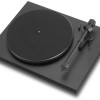
It’s a bit of shame that the simple, no-frills but high-quality designs like those from Pro-ject and Music Hall aren’t more widely available or covered. Myself, I rock a five-year-old Pro-Ject that shows no signs of fading. If one of the mass-merchandise manufacturers were to knock-off one of these, rather than a discredited 80′s plastic wonder, it would do a wonder for the nation’s ears and the long-term viability of vinyl.

Frankly, I’m a little amazed that the vinyl renaissance seems to be thriving as long as it has, especially given how many of the new turntables out there are a bad 80s flashback. Some might argue that the prevalence of MP3s has numbed the country’s ears to true fidelity. I don’t quite buy that argument. MP3s can actually sound pretty good on decent equipment, and the dominance of digital audio has trained us to be less tolerant of added noise.

My best guess is that the continuing vinyl resurgence is really based on sound quality, in as much as vinyl sounds simply different than CDs or MP3s, and can sound better on good equipment. I also think it’s due to the inherent physicality of the LP. It’s bigger size makes the whole album package somewhat more aesthetically pleasing than the CD jewel case. But the starker contrast stands out when compared to the intangible nature of MP3 files.

As someone who is enjoying the increased availability of new vinyl records, I guess I shouldn’t complain too loudly about the plastic turntables, since they appear to be sparking demand. I just hope that at least a few enthusiasts newly awakened to vinyl’s allure will listen past their entry-level IONs or Crosleys and consider a nice used or new turntable that will really let the music shine through (and will also last decades longer, I bet).

mediageek called the cassette revival way before anyone

I’m not generally one for tooting my own horn, but here at the end of 2009 it looks like I was a good two years ahead of the curve when I predicted the cassette revival waayyyy back in February of 20022007. I must admit that my prediction was a bit tongue-in-cheek, not so much because I didn’t think it was possible or reasonable, but because my cynical side can’t help but be a little…er, cynical, about resurgences of technology recently considered passé or obsolete.

credit: Steve the Alien / flickr

credit: Steve the Alien / flicr

Earlier this year I noted the appearance of more cassette-based indie rock labels, mostly dealing in very limited-edition runs of EPs and albums. My own recent travels to record stores like Aquarius in San Francisco and Reckless in Chicago turned up small cassette sections in both store where just a couple of years ago there had been none.

But the real cherry on top was stumbling across recent posts all about cassettes at Stereophile magazine, the home of super high-end audiophiles, where CD players can cost $17,000 and speakers require a second mortgage. Stereophile’s Stephen Mejias was himself spurred to think on the subject of tapes by a recent article by Calum Marsh in PopMatters, “Reconsidering the Revival of Cassette Tape Culture.” Critical as Marsh may be about this ferric oxide return, his very tackling of the subject admits one simple fact: a cassette revival indeed has occurred.

And who was there first? Uh huh, that would be the mediageek.

Aside from the fact of my first arrival, however, I’m rather ambivalent on the whole debate on whether or not the cassette revival is just crass indie-marketing sheathed in manufactured street-cred. For those with still serviceable cassette decks I guess it’s kind of nice to be able to get some new tunes that you didn’t have record yourself. At the same time, the reason I have working cassette decks is because I still have music on cassette not duplicated in another medium, and I still find albums on cassette that are expensive or nearly impossible to find in another medium. I guess these special cassette-only releases qualify, in a way, though by design, not happenstance.

It’s not like cassette-only labels are anything new. Labels like ROIR were cassette-only back in the 1980s, and many cassette-only labels have survived in the interim due to economics and ease of one-off duplication and distribution, if for no other reason. The only reason we can call it a trend now is that bands that otherwise have seen relative indie success distributing their music on CDs are turning to cassette labels for limited editions. If it was still mostly the domain of bedroom noise and industrial bands, we probably wouldn’t be reading about this trend in as mainstream a pub as Stereophile.

Now that indie rock collectors and other hip elites can snarf up limited tunes on cassette I’m wondering if we’ll start seeing more plastic fantastic decks show up in Target, and if the used market will inflate. If you’d taken my advice two years ago then you’d probably be sitting pretty on a nice deck that sold for hundreds in the 80s but that would’ve cost you $15. You’ll be spending more on a super-exclusive new tape by a bunch of bearded guys from Portland.

Now I’ll sit back and see if this hot new trend makes it all the way through 2010 and outlives being a trend, like the vinyl resurgence has. Meanwhile, I’ll remind you that my hipster trend-spotting consultancy is still in business, but my rates are going up fast.

The Irony of the Vinyl Resurgence

Back in the 1980s when the Compact Disc first hit the market there was great excitement in the high fidelity and audiophile world anticipating the arrival of crystal-clean digital sound that would be unmarred by the vagaries of analog playback long suffered by music lovers. Whether vinyl LPs’ clicks and pops or cassette tapes’ hiss, never mind the inconvenience of turning over sides (auto-reverse cassette decks were still a rich man’s luxury), CD not only promised markedly improved sound but the additional convenience of playing a full 74 minutes of uninterrupted tunes and the ability to skip tracks with the push of a button.

Yet, even as much of the audio, electronics and mainstream press swooned over the new digital audio technology, CD had its critics, too. One of the most famous early attacks came from record producer Doug Sax, published in Billboard and Stereophile magazine in 1983. Sax wrote, in part,

[W]hat I have heard on many players, and on more discs than I would ever care to listen to again, is mediocre sound, sound that is often unappealing and fatiguing. …

I have been on record, since I first heard a digital master tape, that there is an enormous price to be paid, in musical terms, for the noise-free performance of digital.

Reading these words today one should hear their echoes in much of what’s been written about the resurgence of vinyl LPs in the last few years. Of course, now music lovers aren’t just dissing CDs, but pitting LPs against the MP3, which is arguably sonically inferior to the CD it’s coming to replace.

Now a generation after the CD’s introduction we have a vinyl revival, which includes a veritable renaissance in the availability of not just new LP records but turntables and record players. I remember searching for a new turntable back in 1996 to replace my aging plastic Onkyo ‘table that I bought in 1987. Even in small hi-fi shops catering to a audiophile crowd I found it difficult to find any turntables under $1000 or so that would offer much improvement over my 80s vintage Onkyo.

Cheap Plastic Record Player StereoThe problems of noise and poor sound quality with cheap turntables in the 80s is what ostensibly drew people to CDs in the 90s. Back in the 80s a lot of people relied on inexpensive compact stereos sold at discount stores. These stereos typically had a turntable, cassette deck and radio, paired with speakers, all for one or two hundred bucks. While capable of playing music, these systems didn’t tend to have outstanding quality in any element of playback, especially vinyl. You’ll still find these stereos in thrift stores and at garage sales, and if you look you’ll find that almost universally they have very flimsy, all-plastic record players.

Even the more expensive so-called rack systems of the day often didn’t feature turntables of much higher quality, even at price points of $500 or more. Those ‘tables would usually be separate components, but still made of 75% plastic. If you were lucky the platter and tonearm might contain some metal.

Playing records is a completely physical process that is very susceptible to the basic forces of Newtonian physics. If you’ve ever stomped around a turntable playing a record then you probably know how easy it is to make it skip. But it’s not just blunt force that takes its toll. So does vibration and electrical interference from other devices, including other stereo components. The prevalent plastic turntables and stereos of the 80s and early 90s have very little in their construction to shield against these quality-killers — most of the time you were lucky if the turntable had some little rubber feet providing some modicum of insulation.

For the average record listener in the 1980s and 90s, the usual listening experience was littered with surface noise, pops, clicks, skips and jumps that was unfairly blamed on the medium of vinyl records, when much of the fault lay upon the cheap, flimsy playback apparatus. So it was a revelation when these listeners first heard the unfamiliar silence between tracks on a CD where before they’d expected hiss and scratches. Instead of having to listen through the noise for the music, CDs sounded as if the fog of analog grunge had been lifted.

Unlike the enormous difference between the typical plastic turntable and a truly high-fidelity model, by the 1990s even relatively inexpensive CD players delivered on the fundamental promises of noise and skip-free sound.

I’m sure it’s like the shift from black and white to color TV, or from AM to FM radio was for previous generations. For those of us who remember the first time we heard CDs it’s not hard to understand how they quickly took over. Most folks who didn’t spend thousands of dollars on stereo gear truly did experience a step forward in quality and convenience.

Still, Doug Sax was not alone. A minority of music lovers chose to stick to vinyl believing it to sound better than CDs. These audiophiles likely owned turntables costing more than an average person’s stereo, TV and music collection combined, which also delivered on the potential of vinyl’s fidelity. Many others stuck with records for practical reasons–like DJs did–or because they were happy enough with their records. I suspect a lot of people, like myself, stuck with records while also moving to CDs, choosing to enjoy the records we owned while buying new music on CD.

Whatever the reason, those of us who stuck with records are enjoying the vinyl renaissance because it means more turntables, more new records and, strangely enough, some degree of cred. At the same time, I also see a step backwards that isn’t so satisfying.

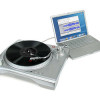
Plastic USB record playerNow that vinyl is retro-popular again it’s ironic that people are flocking to the same sort of cheap plastic turntables that scared folks away from LPs twenty years ago. Within the last year the gadget landscape has been inundated with turntables that connect to your computer by USB, or are attached to CD burners, or which now even record your LPs as MP3s directly to a thumb drive. But almost every single one of these ‘tables is pretty much a plastic late 80s design with some extra digital electronics tacked on. All the more ironic is the fact that the supposed benefit of these new plastic wonders is their ability to let you convert your precious analog records to digital, extra clicks, hiss, pops, skips and all.

I’m not spitting in the face of utility. If you have records which are rare, out of print, irreplaceable, never released on CD or just of sentimental value then I can certainly see why easily archiving them to digital is desirable. What I don’t understand so much is why you’d want to do this archiving at such a low level of quality.

Crosley "retro" turntableIt’s not just these new digitizing turntables. There’s also been an explosion in 80s style compact turntable stereos dressed up in early 20th century retro clothes. Sure the cabinets might look like wood, but inside the record player is the same crap plastic used in that Emerson stereo someone got for Christmas in 1987. Moreover, because the speakers are in the same cabinet, introducing more vibration and interference into the game, these new retro all-in-ones arguably sound worse than the cheap 80s stereo

The funny thing about this is that it’s possible to get a pretty nice sounding turntable made out of very little plastic for less than $300. While not chump change, this is actually about the same as what a decent turntable would have cost in the 80s. Adjusted for inflation, the quality turntable in 2008 costs about $156 in 1985 dollars — less than what you’ve had paid for a flimsy plastic all-in-one stereo.

If you’re willing to invest a little more time and go used, you can pick up nice quality turntables made out of metal and wood that would have cost more than $300 in the 80s for a fraction of that price. Just add a new stylus or cartridge, maybe a new belt, and you’re good to go.

The same phenomenon is happening with cassettes too. There’s almost a double-irony with tapes, which outsold records in the late 80s, before CDs trounced them in the 90s. Besides the convenience of the walkman and car stereo, one of the reasons many people switched to tapes was because they didn’t skip and have quite as much obvious noise as records did (when played on their cheap K-Mart stereos).

Despite my semi-facetious predictions to the contrary, it doesn’t look like a full-on vinylesque revival is happening for cassettes. Nevertheless, USB-connected cassette decks have started to trickle into the marketplace offering up the ability to digitize your tape memories with relative ease. The tech and popular press reaction seems to be a bit more muted for the cassette revival, at least in part because cassettes haven’t quite faded away as much as vinyl had.

I was just a little bit heartened to read a recent CNet review of one USB cassette deck that clearly revealed the flimsy plastic under the flashy digital veneer:

Aside from the USB port on the back, the TapeLink is no better than the cassette deck you probably had in the 1980s, and lacks conveniences such as autoreverse.

More so than with records, I can understand wanting to digitize old cassettes, especially mix tapes or other custom tapes that are difficult to replace or have sentimental value. I’ll also bet that most home recorded tapes were probably created on a plastic 1980s compact stereo to begin with, so there’s likely not so much fidelity lost when digitized using a new deck of similar quality. Of course, if you happen to have a higher fidelity tape–and cassettes could be capable of fine fidelity–you’d probably want to seek out a better, probably non-USB, cassette deck.

While I’m glad to see the resurgence in vinyl and analog music playback in general, I really wish the lessons of the past better informed today’s record enthusiasts–especially those old enough to remember those tacky Emerson, Yorx and Lloyd’s discount store stereos. I fear that for many new or revived record listeners the thin fidelity of these retro-plastic wonders will cause them to tire of vinyl quickly, making LPs more of a novelty than anything else.

Folks got tired of vinyl in the 80s and 90s for a reason: cheap crap plastic turntables. Avoid them now and you’ll still be enjoying your records when you’re less well-equipped friends have tired of their new collections already.

Rumors of VHS’s Death Are Greatly Exaggerated

Oh, planned obsolescence, you are such an insistent mistress.

It seems like the end of the year news hole combined with the imminent digital TV transition (which does not necessarily mean the end of analog TV…) has sparked additional interest in the press ringing the funeral bells for that most ubiquitous yet unloved video medium, the VHS videocassette. The renewed attentiveness was triggered by a recent LA Times article about the last remaining supplier of pre-recorded VHS tapes to retail stores. The discount supplier tells Times reporter Geoff Boucher,

Photo credit: the waving cat / flickr

Photo credit: the waving cat / flickr

“It’s dead, this is it, this is the last Christmas, without a doubt,” said Kugler, 34, a Burbank businessman. “I was the last one buying VHS and the last one selling it, and I’m done. Anything left in warehouse we’ll just give away or throw away.”

Boucher notes that the last major Hollywood release on VHS was 2006′s “The History of Violence.” However, that does not mean it’s the last VHS release, since there are certainly direct-to-video, corporate, promotional and independent releases still being churned out on videocassettes. And that’s just US market. What about VHS in less developed nations especially India and Latin America, where the push to new formats goes slower because there’s that much less disposible income?

Photo credit: moneboh / flickr

Photo credit: moneboh / flickr

I don’t have a beef with Boucher’s article so much as the second-order press and blogosphere reaction that seizes upon the “VHS is dead” meme rather than the more specific point that the production and distribution of pre-recorded VHS movies are ending. My problem is two-fold. First, I can’t help but think the minor panic-inducing tone of the overall reportage is timed and focused in order to help drive DVD and Blu-Ray sales, especially amongst the digital disc holdouts who up to now have been satisfied with their VHS collection.

Second, it’s overly simplistic to say that VHS is dead just because prerecorded tapes will become more scarce in 2009. One of the most disruptive aspects of home videocassette technology is the fact that it’s recordable; with a VHS VCR you don’t have to simply rely on a steady stream of commercially prerecorded content. I’m willing to bet that millions of VHS VCRs are still in service across the US doing just that — recording someone’s favorite movie on TV or timeshifting a favorite TV program.

Sure, millions of people have shifted to using DVD recorders or DVRs for that purpose, or are time-shifting by watching things online. But that population is still a small percentage of the whole, characterized by having the income necessary to afford these more expensive technologies, combined with the knowledge, interest and will to use them. VHS is dead for a certain class of people, but not the whole country.

Nevertheless, it is true, as one TV report said, that “VHS’ days appear numbered. ” But then, that’s been true pretty much since the first year of DVD, when that technology went on to set records for fast large-scale adoption. Even then the writing was on the wall, just as it is with nearly every single consumer electronics technology ever introduced. Do not doubt that from the time when the first VHS recorder rolled off the assembly line that the electronics giants didn’t have dozens of designs for its successor on the drawing board. It just took until 1997 for DVD to strike the right combination of size, convenience, image quality and price.

Obsolescence is not a natural process, but one planned right into the consumer economy. Now, I’m not arguing against innovations and the succession of technologies with better, more attractive qualities and greater utility. I certainly barely watch VHS tapes myself, and mostly rely on my DVR and on DVDs. So VHS is not a vibrant everyday technology in my household. Yet, that does not mean VHS is useless or dead.

Of course this is the sunset for VHS, but I question the rush to scare people into buying new technologies. Certainly, my recommendation to anyone who has VHS tapes that have irreplaceable stuff on them to consider copying them to DVD, whether it’s a home video or an out-of-print movie (you don’t even need your own DVD recorder — most chain drug stores in the US will do it for you). But that’s as much because of the inevitable slow degradation of magnetic media as it is the eventual death of VHS. I’d make the same recommendation if your precious memories are on DVD — though copying a rare commercially recorded disc will prove more difficult due to digital rights management.

Some justification for declaring VHS’ death rests upon the analog TV transition happening in February. And while it is true that your old VHS workhorse will not be able to record the new digital signals directly, it’s not counted out. The first reason why is that if you still have an analog TV and are using a cable converter box or one of the digital converter boxes for over-the-air broadcasts, then your VCR should still be able to record their digital output. Furthermore, even new digital TVs still have analog inputs for VCRs, DVD players, game consoles and the like, and will continue to have them for a long time. So getting a new flat-panel TV doesn’t mean you can’t still watch your VHS tapes.

Let’s remember that vinyl records and cassettes were declared dead in the early 90s when CDs finally became predominant. And yet, here we are in 2009 and we’re reading about the minor resurgence of vinyl, and you can still buy new books on tape. Sure, you’re not going to find the newest rock albums on new cassette, and new vinyl LPs are still made in tiny numbers compared to CDs. Yet that does not qualify a format as “dead.”

It’s arguable that the LP resurgence is driven both by nostalgia and a hardcore minority that has contended that vinyl sounds better and therefore stuck with the format through the CD era. Cassettes also have some nostalgic allure for many, especially when it comes to memories of mix tapes, while having a much tinier fanbase who cling to the format for its sheer fidelity. I think it’s too early to tell if there will be gathering nostalgia for the lowly VHS videotape in the same way. I’m not sure people have the same emotional attachments to recordings of TV shows and movies that they have for music… but that could just be me.

If you’re wanting to rent or buy the newest Hollywood movie releases then you’re going to need a DVD player — but then, just about anyone with that desire in the US already knows that and has made the appropriate decision. If you’ve still got a VHS VCR and are happily using it there’s no need to panic. Now might not be a bad time to pick up a spare VCR if you can afford it, nor is it a bad time to consider making DVD backups of anything that’s really valuable to you.

Photo credit: dipdewdog / flickr

Photo credit: dipdewdog / flickr

But make no mistake, there’s no indication that you won’t be able to buy a new VCR or blank VHS taps for quite some time to come. Unlike Polaroid film or other single-manufacturer technologies, VHS was licensed far and wide. As long as there’s a buck to be made making and selling recorders and tapes, they’ll be out there.

Like cassettes and vinyl records, VHS tapes and VCRs will continue to live alongside the technologies that are supposed to replace them. Going out of favor does not mean obsolete.

Read more »

Don’t Be Spooked by Threats of Obsolesence

One of the unfortunate effects of our capitalist economy is the constant drive for new and better. Well, really it’s mostly new and novel, with better being a secondary consideration. That means obsolescence is something that constantly looms over industrial products, especially tech products. But obsolete does not equate with useless or worthless–not remotely.

With the rising popularity of digitally downloaded music, whether through file sharing or an online store, the imminent death of the physical compact disc continues to be predicted. The cries have become louder in the last few weeks as Atlantic Records announced that its digital download sales (which includes ringtones) surpassed its sales of physical CDs.

I’ll admit that these days I probably listen to more MP3s than CDs, especially on the go. Yet, I still have a collection of over 1000 CDs, most of which I have not ripped to MP3–my MP3 collection is comprised mostly of purchased music and stuff I’ve traded with friends. I do still listen to CDs, especially when I want to listen critically. I realize that absolute fidelity is only one factor in how we choose to listen to music, it’s still important to me and many other people. While MP3s and other compressed files can sound quite good, they are no match for the uncompressed source.

That’s why I’m not surprised to read a Wired Gadget Lab post directing me to this story from the UK’s Telegraph reporting that the sales of portable CD players there are up 50 percent over last year. Amongst the reasons they cite are price ( I’ve seen units here sell for $15 or less) and the fact that many people find using a computer to download to an MP3 player to be difficult.

One very obvious reason I want to add to the list is that maybe a whole lot of people aren’t interested in giving up their CDs in the first place. If you aren’t interested in dealing with the iTunes music store (especially if you don’t want to pay the iPod price premium) or any other online music store, and you don’t relish the task of having to rip and compress your CDs yourself I can see how the supposed convenience offered by MP3 players and digital files can look pretty darn inconvenient.

Folks over 30 can probably remember when they got their first CD player, moving over from listening primarily to vinyl LPs or cassettes. I knew a lot of people who all but dumped their analog music collections for CDs in the early 90s, lured in by the promises of better sound quality and convenience. By and large those promises were fulfilled, compared to the lo- to mid-fi sound experiences most people were accustomed to getting from inexpensive cassette and record players. But it was also a pretty big cash outlay for a lot of people, many of whom replaced their music collections with the same titles on CD as the popular press sounded the funeral march for the soon-to-be-obsolete vinyl LP.

Now twenty-six years after the introduction of the CD we have none other than the New York Times writing about the resurgent interest in vinyl records, sales of which are up 36% this year. Weren’t these fragile, scratchable, pop-and-click-filled analog dinosaurs supposed to be a curious historical artifact by now?

Myself, I never abandoned my record collection. When I bought my first CD player in 1987 I also bought my first decent turntable. From 1988 through the mid-90s I really cleaned up buying used vinyl for a song as other music lovers dumped their obsolete analog archives. I still buy both used and new vinyl, though since the big purge of the early-90s the good stuff isn’t quite as cheap anymore.

I’m sure a fair majority of the folks who dumped their vinyl for CDs have never looked back. But I’ve talked to and read about plenty more people who are buying new turntables to play their last remaining albums that never turned up on CD, or who are even going out and rebuying LPs they got rid of because their CDs just don’t cut it.

So keep this in mind when you hear bloggers and the press declaring the end of the CD and all physical media. It makes complete sense to me that sales of portable CD players are up because I can believe there are plenty of people who just want something will play all the music they’ve acquired without all the hassle of ripping and storing MP3s. Why “upgrade” to MP3s and iPods if CDs still work just fine and you’ve already got an investment in music on CD?

Of course, I do think the trend towards digital files and mass storage is real and underway — I do have a couple hundred gigs of MP3s on a server at home. But these technologies tend to live side-by-side for far longer than the technorati recognize. The cassette didn’t kill the LP, the DVD still hasn’t killed VHS, and the iPod won’t kill the CD. Even formats often joked about as comparative failures lived almost as long as the CD has–from laserdiscs (in production 1978-1999) to 8-tracks (1964 – 1988)–and still have their fans using them everyday.

The newest and shiniest technology can be very seductive, but utility is what wins the day. For a lot of formats there eventually does come a day when finding a working player becomes harder and harder. But for something as ubiquitous as the LP, cassette or CD that moment is a long way away.

The folks snapping up CD players this holiday season aren’t technophobes or luddites, they’re just reasonable folks who maybe don’t want to foolishly abandon the shiny little discs they spent good money for.

WordPress Themes